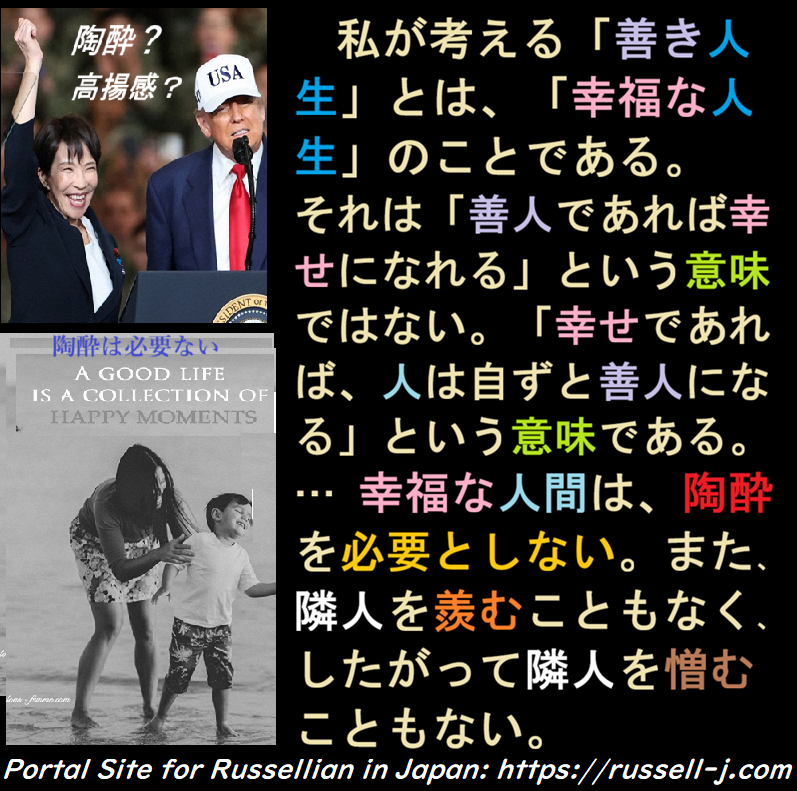
「私が考える『善き人生』とは、『幸福な人生』のことである。それは『善人であれば幸せになれる』という意味ではない。『幸せであれば、人はおのずと善くなる』という意味である。 …… 幸福な人間は、陶酔を必要としない。また、隣人を羨むこともなく、ゆえに隣人を憎むこともない。」
"The Good Life and The Happy Life
The good life, as I conceive it, is a happy life. I do not mean that if you are good you will be happy; I mean that if you are happy you will be good. ... The happy man does not desire intoxication. Nor does he envy his neighbor and therefore hate him.
出典: Bertrand Russell: New Hopes for a Changing World, 1951, p.16
「陶酔(intoxication)」を求める人々
為政者や権力者、あるいは特権的な立場にある者や宗教家は、人々が「陶酔(intoxication)」を求める傾向にあることを熟知しています。そして、大衆のこうした心理的傾向を、自らの目的のために巧妙に「利用」します。
政治家は、国民が日々の生活の行き詰まりや政治の失政を一時的にでも忘れるような、巨大イベント(万博など)の誘致に心血を注ぎます。熱狂の中にあれば、その裏で多少の不正や汚職が行われても、多くの国民は「見て見ぬふり」をしてくれるからです。マスコミもまた、国民の熱狂に水を差すような報道は控え、祝祭ムードを煽ります。
例えば東京オリンピックでは、多額の賄賂による誘致疑惑や、コロナ禍での強行開催という無理があったにもかかわらず、「選手のことを第一に」という大義名分の下で実施されました。結果として、多くの人々は選手の活躍による「感動」という名の陶酔に身を任せ、全てを浄化するように「やってよかった」と肯定しました。カタールでのFIFAワールドカップも同様です。開催までの10年間に6,500人もの外国人労働者が亡くなったことが報じられましたが、いったん祭典が始まれば、その悲劇に触れるメディアはほとんど姿を消しました。
富裕層もまた、この構造の中にいます。自分たちが享受する贅沢な暮らしを、貧困に喘ぐ人々との対比によって確認し、優越感という陶酔に浸ります。中には、その格差を是正するのではなく、むしろ利用する「貧困ビジネス」に乗り出す者さえいます。
宗教家は、地獄の思想などを説くことで人々の心の隙間にある「不安」という名の不幸を刺激し、帰依すれば救われると説いて勧誘に精を出します。昨今、特定の宗教団体(統一教会)が社会問題となっていますが、多くの宗教の本質には、人間の恐怖心を利用し、信仰という名の陶酔へ誘う構造が潜んでいます。
バートランド・ラッセルは、こうした権力や組織が提供する「偽りの陶酔」に依存する生き方とは、真逆の態度を示しました。彼が説く「幸福な人間」は、外部から与えられる刺激や熱狂を必要としません。内面が満たされているからこそ、誰かに操作されることなく、隣人を羨むこともなく、したがって隣人を憎むこともない、静かで自立した自由を手にすることができるのです。
People in Search of "Intoxication"
Those in power -- statesmen, the privileged, and religious leaders -- are well aware of the human tendency to seek "intoxication." They skillfully exploit this psychological inclination of the masses for their own ends.
Politicians devote their energy to hosting mega-events, such as World Expos, designed to make the public forget, even temporarily, the deadlocks of daily life and political failures. They know that in the midst of a frenzy, many citizens will turn a blind eye to the corruption and scandals occurring behind the scenes. The media, too, fuels the festive mood, refraining from reports that might dampen the public's enthusiasm.
The Tokyo Olympics, for instance, was forced through under the pretext of "putting the athletes first," despite allegations of bribery in its solicitation and the unreasonableness of holding it during a global pandemic. As a result, many people surrendered themselves to the intoxication of "inspiration" provided by the athletes' performances, ultimately validating the event with the sentiment that "it was worth it," as if to purify all previous wrongdoings. The FIFA World Cup in Qatar followed a similar pattern. Although it was reported that approximately 6,500 migrant workers died in the ten years leading up to the tournament, once the festival began, media coverage of that tragedy virtually vanished.
The wealthy are also part of this structure. They immerse themselves in the intoxication of superiority, confirming their own luxurious existence by contrasting it with those struggling in poverty. Some go as far as to launch "poverty businesses" that exploit these disparities rather than rectifying them.
Religious leaders stimulate the unhappiness known as "anxiety" within the gaps of people's hearts by preaching doctrines such as hell, and they exert great effort in proselytizing by claiming that salvation is found through devotion to their faith. While specific religious groups (such as the Unification Church) have recently become a social issue, the essence of many religions harbors a hidden structure that exploits human fear to lure people into an intoxication called faith.
Bertrand Russell demonstrated an attitude diametrically opposed to a life dependent on the "false intoxication" provided by such powers and organizations. The "happy man" he describes does not require external stimulation or manufactured fervor. Precisely because he is fulfilled from within, he can attain a quiet, self-reliant freedom --immune to manipulation, harboring no envy toward his neighbor, and therefore feeling no hatred toward him.
 ラッセル関係電子書籍一覧 |
 ラッセル関係電子書籍一覧
#バートランド・ラッセル #Bertrand_Russell